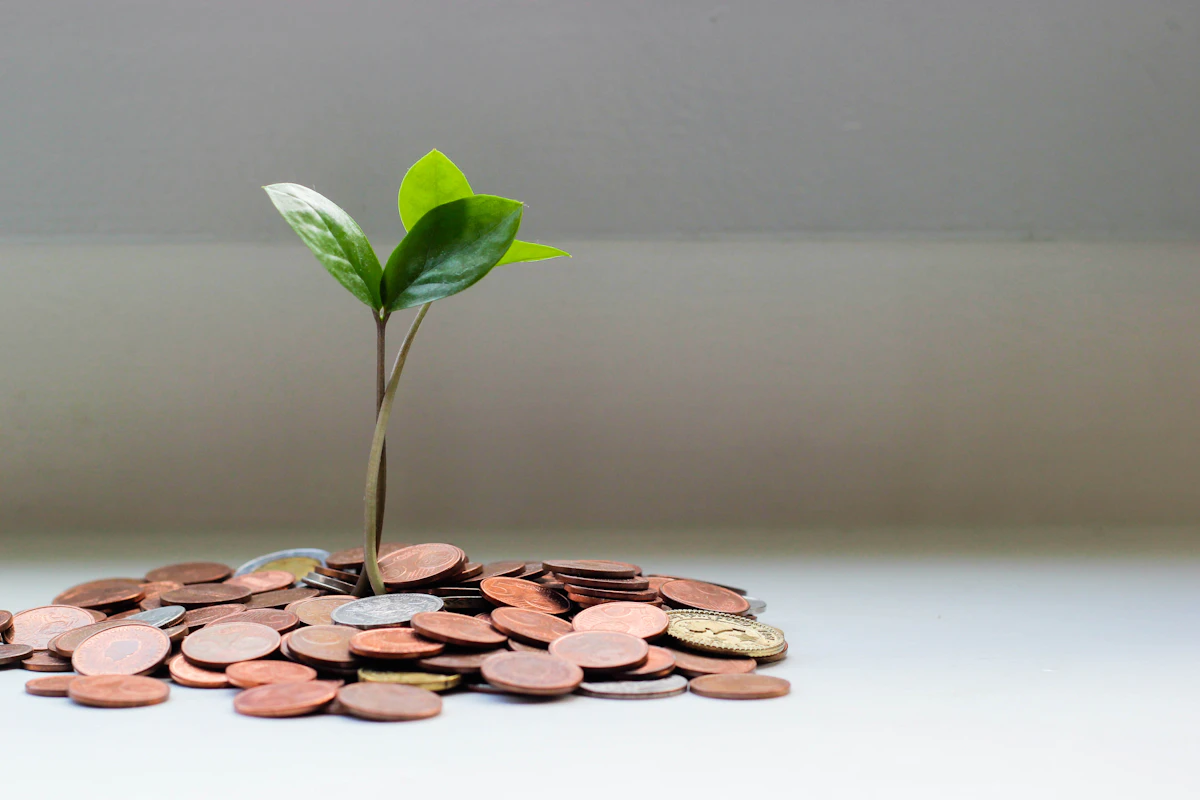
I still remember sitting at my kitchen table late one Tuesday night, staring at my bank statement and feeling this slow, burning frustration creep up from the pit of my stomach. I had $9,000 sitting in my regular savings account — money I had scrimped, skipped coffee shops for, and quietly squirrelled away for nearly three years. And do you know how much interest it earned that year?
Ninety-one dollars.
Ninety-one dollars on nine thousand. Less than a dollar a week. While inflation was quietly chewing through my purchasing power like a termite in the walls. That night, something clicked. I wasn't saving — I was losing, just very slowly.
If you've ever felt that way — like your savings account is more of a comfortable-feeling storage locker than an actual financial tool — this guide is for you. In 2026, high-yield savings accounts (HYSAs) are offering rates up to 5.00% APY, more than 13 times the national average. That's not a typo. And most of them are free, federally insured, and take about 10 minutes to open.
I'm going to walk you through everything: the best accounts right now, the fees banks don't advertise, and exactly when it makes sense to switch — even if the idea of changing banks makes you break out in a mild anxiety sweat. (Been there.)
📋 What You'll Learn in This Guide
- What exactly is a High-Yield Savings Account?
- Best HYSA Rates in May 2026 (Updated)
- How much more will you actually earn?
- Hidden fees that quietly kill your interest
- Traditional bank vs. HYSA: The honest truth
- When should you switch accounts?
- How to switch (without the drama)
- Your burning questions, answered
What Exactly Is a High-Yield Savings Account?

A high-yield savings account is, at its core, a savings account — just one that treats your money with a little more respect. Technically, it's not a separate "type" of account from a regulatory standpoint. But in practice, it's a completely different league.
Here's the thing big banks don't want you to think too hard about: traditional savings accounts at major institutions like Chase, Bank of America, and Wells Fargo typically offer 0.01% APY. On a $10,000 balance, that earns you exactly one dollar over the course of a year. Online banks and credit unions, freed from the overhead of thousands of physical branches and marble lobbies, can afford to pass those savings on to you in the form of dramatically higher interest rates.
HYSAs are almost always FDIC-insured (or NCUA-insured at credit unions), meaning your money is federally protected up to $250,000 per institution. They're not investments — your balance doesn't go up and down with the market. They're just a smarter parking spot for money you need to stay accessible while still growing.
Best High-Yield Savings Account Rates — May 2026
The Federal Reserve has held its benchmark rate steady through all three decisions in 2026 so far (the target range sits at 3.50%–3.75%). That stability means HYSA rates have held up beautifully this year, even after three modest cuts in late 2025. The top rates are clustering between 4% and 5% — a level that would have seemed almost fantastical just a few years ago.
Here's a live snapshot of the best accounts available right now, verified as of May 15, 2026:
| Bank / Institution | APY | Min. Opening Deposit | Monthly Fee | Notes |
|---|---|---|---|---|
| Varo Money Top Rate | 5.00% | $0 | $0 | Up to $5,000 balance; conditions apply Conditional |
| SoFi Checking & Savings | 4.50% | $0 | $0 | Requires direct deposit or $5K/month deposit |
| Axos ONE Savings | 4.21% | $250 | $0 | 95,000+ fee-free ATMs; direct deposit req. |
| Newtek Bank HYSA | 4.20% | $0 | $0 | Currently waitlisted; NerdWallet 2026 Award winner |
| Vio Bank | 4.03% | $100 | $0 | Best no-conditions rate; solid all-rounder |
| Openbank (Santander) | ~4.00% | $500 | $0 | Higher min. deposit; FDIC-insured |
| Barclays Online Savings | 3.65% | $0 | $0 | Tiered rate; $250K+ earns 3.75% APY |
| SoFi (Standard, no direct dep.) | 3.30% | $0 | $0 | SoFi Plus members get additional boost |
| Traditional Big Bank avg. | 0.01% | Varies | $12–$25 | Chase, BofA, Wells Fargo — avoid for savings |
⚠️ Rates are variable and subject to change. Always verify directly with the bank before opening an account. Data sourced from NerdWallet, Fortune, and Bankrate as of May 14–15, 2026.
If you want the absolute simplest win: Vio Bank at 4.03% APY requires no conditions, has a low $100 minimum deposit, and charges zero monthly fees. Open it. Move your existing savings there this week. Done. You're now earning more than most people reading this.
How Much More Will You Actually Earn? (Real Numbers)
Let's stop talking in percentages for a second and talk in actual dollars — because that's what changes behaviour.
Say you have $15,000 saved. Maybe it's your emergency fund, a house deposit, or just money you haven't figured out what to do with yet. Here's what happens to it over 12 months depending on where it lives:
| Where Your Money Sits | APY | Interest Earned (1 yr) | After 3 Years |
|---|---|---|---|
| Chase / BofA (typical big bank) | 0.01% | $1.50 | $4.50 |
| National Average Savings Account | 0.38% | $57 | $172 |
| Vio Bank HYSA | 4.03% | $604 | $1,897 |
| SoFi HYSA (with direct deposit) | 4.50% | $675 | $2,117 |
| Varo Money (conditional 5%) | 5.00% | $750* | $2,357* |
*Varo's 5% applies only to the first $5,000. Remaining $10,000 earns a lower rate. Figures are approximate and assume compounding monthly with no withdrawals.
That's a difference of $600+ every single year just from parking your money somewhere smarter. No extra work. No risk. No stock picks. You're just not leaving money on the table anymore.
The Hidden Fees That Quietly Kill Your Interest

Here's where I want to be your friend who tells you the thing nobody else is saying loudly enough. Banks — even the good online ones — have ways of quietly eroding your interest earnings. And because the fees are buried in lengthy disclosure documents, most people never notice until they're actually losing money.
I've combed through dozens of account disclosures so you don't have to. Here are the six categories of hidden fees you must check for before opening any HYSA:
1. The Monthly Maintenance Fee Trap
Most top HYSAs charge zero monthly fees. But some accounts — especially those at traditional banks marketing "premium" savings rates — charge $10 to $25 per month unless you maintain a minimum balance or meet direct deposit conditions. On a $2,000 balance, a $12/month fee wipes out all your interest and then some. Always check: Is the fee $0 unconditionally, or only waived under certain conditions?
2. Teaser Rates That Expire
This one makes me genuinely irritated on your behalf. Some banks offer a dazzling promotional APY — sometimes 5%, sometimes even higher — that lasts 3 to 6 months, then quietly drops to a far less impressive rate. Wells Fargo's Platinum Savings, for example, currently runs a boost promotion through May 31, 2026, that bumps the rate for 6 months. After that? The base rate is much lower. Always ask: "What is the ongoing standard APY after any promotional period ends?"
If a rate feels unusually high — say, 6%+ with no conditions at a major bank — set a calendar reminder for 90 days. Check the account again. Promotional rates are not permanent rates, and banks are not required to notify you when they change.
3. Minimum Balance Requirements That Affect Your APY
Some accounts look great on the surface but have tiered rates: you only earn the top APY above a certain balance. Axos ONE, for example, requires meeting monthly direct deposit conditions to earn the full 4.21% APY. If you don't meet the threshold, you may earn significantly less. Always check: Does the advertised APY apply to my balance from dollar one?
4. Wire Transfer and Outgoing Transfer Fees
Most online banks don't charge for standard ACH transfers (the regular bank-to-bank kind that takes 1–3 days). But outgoing wire transfers — the kind you might need if you're closing on a house or sending a large sum quickly — can cost $15 to $30 per transaction. SoFi, for example, does charge for outgoing wire transfers. If you anticipate needing wire capability, factor this in.
5. Paper Statement Fees
Sounds minor. It isn't if you like having paper records. Bread Savings, a well-regarded HYSA provider, charges $5 per paper statement request. Go paperless, and you're fine. But it's worth knowing.
6. Withdrawal Limits (And Excessive Transaction Fees)
Pre-2020, all savings accounts were legally limited to six withdrawals per month. The Federal Reserve lifted that rule during COVID, and most banks followed. But not all. Some accounts still limit withdrawals and may charge $5 to $15 per excess transaction. If your emergency fund lives in an HYSA, make sure it's actually accessible when emergencies happen.
Before opening any HYSA, run through this quick check:
- No monthly maintenance fee (or clearly waivable at $0 balance)
- APY is ongoing, not promotional (or you know the end date)
- Advertised APY applies from the first dollar deposited
- ACH transfers are free both directions
- No withdrawal limits, or limits you can comfortably work around
- FDIC-insured (bank) or NCUA-insured (credit union)
Traditional Bank vs. High-Yield Savings: The Honest Truth
I'm not going to tell you to close all your traditional bank accounts and move everything online tomorrow. That would be extreme and impractical. What I will say is this: keeping all your savings in a big-bank savings account in 2026 is a choice that costs you real money. Here's how they stack up, honestly:
🏦 Traditional Big Bank Savings
- APY: 0.01% – 0.10% (usually)
- In-person branch access
- ATM card usually included
- Higher monthly fees (often $12–$25)
- Minimum balance requirements common
- Familiar brand name = false sense of security
- $150/yr interest on $10K at 0.01%? Try $1
💻 High-Yield Savings Account (Online)
- APY: 4.00% – 5.00% currently
- No physical branches (usually)
- ATM access at many (Axos: 95K+ ATMs)
- Usually $0 monthly fees
- Low or zero minimum deposits
- FDIC insured — equally safe
- $600+/yr interest on $15K — same money, smarter home
The only real advantage of a traditional bank savings account is the in-person experience — walking into a branch if something goes wrong. If that matters to you, a sensible middle ground is: keep your checking account at your regular bank for day-to-day access, and move your actual savings to an HYSA. Best of both worlds.
When Should You Actually Switch? (Honest Signals)

The fear of switching banks is almost universal. I've spoken to so many people — smart, financially literate people — who know their savings account is terrible but haven't switched because it feels complicated, or scary, or like too much admin. Let me demystify it: switching an HYSA is genuinely one of the lowest-friction financial decisions you can make. It takes about 10–15 minutes and usually requires just a government ID and your existing bank account details.
That said, there are clear signals it's time to make the move. Switch your savings if:
- Your current savings account earns less than 2% APY (and you're not in a temporary CD)
- You're paying any monthly maintenance fee on a savings account
- Your bank recently lowered your savings rate without telling you
- You have $1,000 or more sitting "just in case" — that money deserves to work
- You've had the same savings account for 5+ years and never compared rates
- Your current APY is less than the current inflation rate (3.8% CPI as of April 2026)
As of April 2026, the Consumer Price Index shows inflation running at approximately 3.8% year-over-year. If your savings account earns less than that, you are — in real terms — losing purchasing power every month. Your balance number goes up, but what it can actually buy goes down. A 4%+ HYSA is one of the very few low-risk ways to at least keep pace with inflation right now.
When NOT to switch (yes, this exists)
Switching isn't always the right move. Consider staying put if:
- Your current rate is already above 3.5% APY and switching would offer less than 0.5% improvement (the admin may not be worth it)
- You need your savings within 3 months — transfer delays of 1–3 business days matter in genuine emergencies
- You're in the middle of a mortgage application — avoid opening new accounts during underwriting
- The new account has conditions you genuinely can't meet (e.g., requires direct deposit you don't have)
How to Switch Your Savings Account (Without the Drama)
Okay, you've decided. Let's do this properly so nothing goes wrong. Here's the exact process I'd walk a friend through:
-
Choose your new account
Use the rate table above to pick an account that suits you. If you want zero conditions, go Vio Bank (4.03%). If you have direct deposit, SoFi (4.50%) is outstanding. Write down the account name, APY, and fee structure before you start.
-
Open the new account online
Most HYSAs open in 10–15 minutes online. You'll need: a government-issued ID (passport or driver's licence), your Social Security Number (US) or equivalent, and your existing bank's routing and account number to make the initial deposit. Some accounts have a small minimum deposit ($100 for Vio; $250 for Axos).
-
Make the initial deposit — but keep your old account open
Do NOT close your old account immediately. Transfer the bulk of your savings to the new HYSA, but keep a small buffer (say, $500) in your old account. Many banks charge early closure fees or have automatic subscription payments linked. Give it 30–60 days to make sure no surprise charges hit the old account.
-
Update any automatic transfers
If you have automatic savings deposits set up (recurring transfers from checking to savings), update them to point to your new account. Check your banking app's "scheduled transfers" section.
-
Monitor the first interest payment
Most HYSAs credit interest monthly. After your first full month, log in and verify the interest appeared at the rate you expected. If something seems off, contact the bank's customer service immediately.
-
Close the old account (after 60 days)
Once you're confident no pending charges will hit the old account, transfer the remaining buffer to your new HYSA and request account closure. Get written confirmation (email or letter) of the closure date.
Many financially organised people keep their checking account at a traditional bank (for the physical branch, debit card, and familiarity) while parking all actual savings in an HYSA. The small inconvenience of a 1–2 day transfer time between accounts is absolutely worth earning $600+ more per year. Set up a standing weekly or monthly transfer from checking to your HYSA and let compound interest do the quiet work.
Your Burning Questions, Answered
Yes — absolutely. Every account on this list is FDIC-insured (or NCUA-insured for credit unions). That means the US federal government backs your deposits up to $250,000 per institution. Online banks are equally safe as traditional banks in this regard. The FDIC has never failed to pay out a covered deposit since it was created in 1933.
HYSA rates are variable, meaning they move with the Federal Reserve's decisions. The Fed has held rates steady at 3.50%–3.75% through all three 2026 announcements so far. If a cut does happen, banks typically lower HYSA rates within weeks. This is why some experts suggest locking a portion of savings into a CD (Certificate of Deposit) at a fixed rate if you want guaranteed returns for a set period.
Yes. Interest earned in a high-yield savings account is considered ordinary income and is taxable in the US. You'll receive a 1099-INT form from your bank if you earn more than $10 in interest during the tax year (which you almost certainly will). Factor this into your planning — a 4% APY after a ~22% tax rate becomes roughly 3.1% effective. Still dramatically better than 0.01%.
Yes, and there's actually a compelling reason to do so: it extends your FDIC coverage. If you have more than $250,000 in savings (congratulations, by the way), splitting it across two or more FDIC-insured institutions doubles your federal protection. Additionally, some people maintain separate HYSAs for different goals — one for an emergency fund, one for a house deposit, one for vacation savings.
Standard ACH transfers typically take 1–3 business days. Some banks offer expedited transfers for existing linked accounts that can settle same-day or next-day. Wire transfers settle faster (same day in most cases) but cost $15–$30. For most people, the standard 1–3 day wait is fine. Just don't do it the day before a bill is due.
This is genuinely one of the best uses of an HYSA. An emergency fund needs to be: (1) safe, (2) accessible, and (3) ideally growing. HYSAs tick all three boxes. The general rule is 3–6 months of living expenses. Keep your emergency fund in a no-fee HYSA that allows unrestricted withdrawals. Don't invest your emergency fund in stocks or CDs where accessing it quickly might cost you money.
Ready to Stop Leaving Money on the Table?
The best time to open a high-yield savings account was three years ago. The second best time is right now. Even $500 earns something. Even $100 earns something. Start small — start today.
Compare the Best Rates Above ↑A Final Word from Amreen

I went back to my bank statement recently. The one that used to make my jaw clench. My savings sit in a HYSA now — Vio Bank, mostly, with a secondary account at SoFi. Last year alone, I earned just over $640 in interest on money that was just... sitting there. Being boring. Doing nothing dramatic.
Six hundred and forty dollars. About the cost of a return flight somewhere lovely. Or eight months of a streaming subscription. Or a really, really good winter coat. Money that existed because I spent fifteen minutes one Sunday morning moving an account.
I'm not telling you this to show off. I'm telling you because financial anxiety is real, and it often comes not from being irresponsible — but from not knowing that a better option existed. You do now. The gap between what most people earn on their savings and what they could earn is thousands of dollars over a decade. You deserve to close that gap.
Open the account. Transfer the money. Set a reminder to check the rate again in six months. And then go spend your time on literally anything more interesting than thinking about where your savings live — because that's the point. A good HYSA works in the background so you don't have to.
As always — I'm rooting for you. 💙
Disclosure: This blog post is for informational purposes only and does not constitute financial advice. All APY rates are variable and subject to change. Always verify current rates directly with the bank before opening an account. Amreen is not a licensed financial advisor. Some links in this post may be affiliate links.
Comments
Post a Comment